


How Himi Udon Is Made | Traditional Japanese Noodle Craft

Himi udon is known for its distinctive firmness and smooth texture.
Behind that texture is an unusual noodle-making method that combines elements of both "teuchi" (hand-pounded) and "tenobe" (hand-stretched) techniques.
This time, we take a closer look at the traditional method behind Himi udon and the technique Kaizuya continues to carry on today.
What makes Himi udon different?
There are many famous udon-producing regions throughout Japan, but Himi udon has developed its own distinctive method.
One of its defining characteristics is the combination of two approaches: "teuchi," in which the dough is firmly kneaded, and "tenobe," in which the noodles are gradually stretched by hand.
The combination creates the distinctive texture associated with Himi udon.
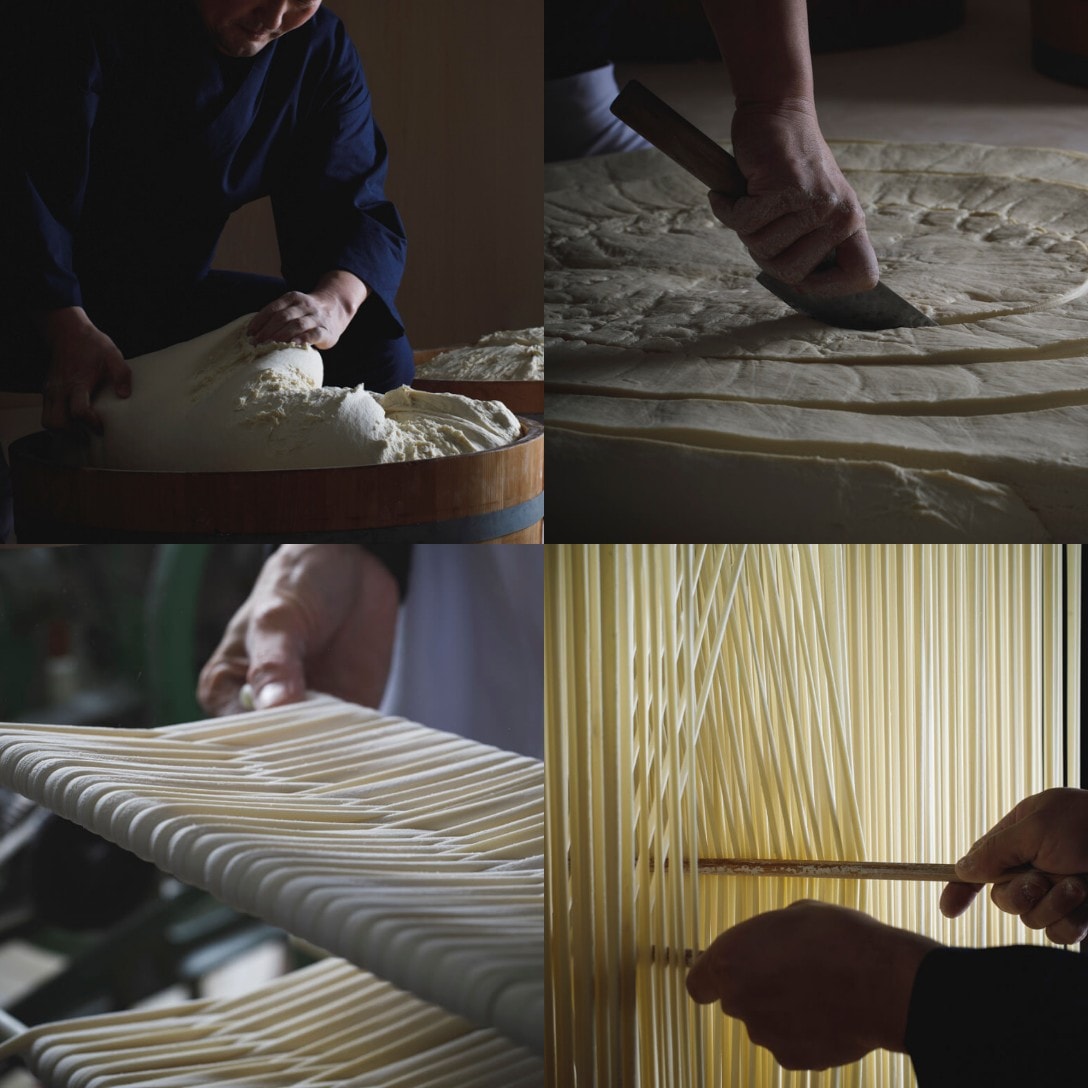
"Teuchi": firmly kneading the dough
One part of the process comes from the "teuchi," or hand-pounded, approach.
The dough is thoroughly kneaded, including a process of treading it with the feet.
This careful kneading helps develop the structure of the dough before it is stretched into noodles.
It is one of the foundations behind the characteristic firmness of Himi udon.
"Tenobe": twisting and stretching by hand
The next important element is "tenobe," meaning hand-stretched.
The dough is stretched gradually by hand while being twisted.
This is not simply a matter of cutting a sheet of dough into noodles. The noodles themselves are repeatedly worked and stretched.
Kaizuya describes this as a traditional technique born in Noto that has been inherited and carried into the present day.
Stretching the noodles without oil
Another characteristic of the Himi method is that the noodles are stretched without using oil.
The technique developed uniquely in Himi based on the noodle-making traditions that had arrived from Noto.
The combination of careful kneading, treading, twisting, and hand-stretching produces the distinctive character of Himi udon.
Firmness and smoothness created by hand
According to Japan's Ministry of Agriculture, Forestry and Fisheries, combining the teuchi element of firmly kneading and treading the dough with the tenobe element of twisting and stretching it by hand is the secret behind Himi udon's distinctive firmness and smoothness.
In other words, its texture is closely connected to the way the noodles are made.
The process requires time and effort, but it is precisely this labor-intensive method that gives Himi udon its distinctive character.
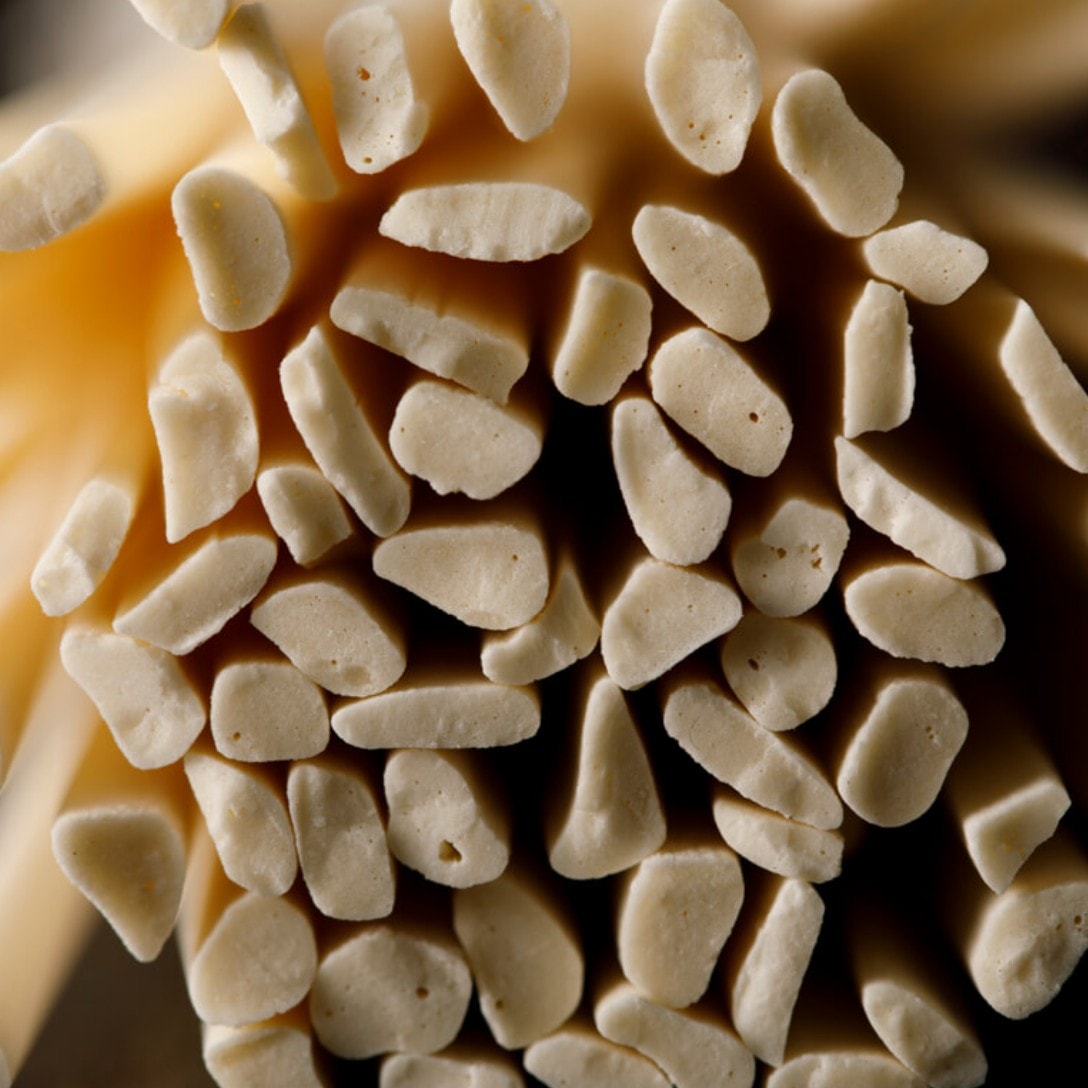
Experience Kaizuya's Himi udon on Mikan
On Mikan, we carry Himi udon made by Kaizuya using the traditional techniques passed down in Himi.